
In 2026, location alone no longer guarantees success for a perfume vending machine.
The same machine can perform very differently in different environments.
Foot traffic still matters.
But it is no longer the deciding factor.
What matters more is how the machine is operated.
Pricing.
User behavior.
And the role the machine plays in a specific location.
This article explains which business model fits each location, based on real operation logic rather than rankings.
Why Location Strategy Has Changed in 2026
The market is mature.
Cashless payment is standard.
Touchscreens are expected.
Self-service behavior is familiar.
In 2026, results depend more on how a machine is run than where it is placed.
Profitability comes from:
Conversion rate
Time spent on site
User mindset
A strong model can outperform a strong location.
Industry reports from sources such as Grand View Research show that consumer familiarity with self-service retail continues to grow.
Core Business Models in Perfume Vending
Choosing the right model matters before choosing the location.
High-Volume Transaction Model
Low price.
Fast decisions.
Minimal interaction.
Best for fast-paced environments.
Premium Brand Exposure Model
Higher price.
Strong presentation.
Limited fragrance selection.
Margin over volume.
Experience-Driven Model
Interactive screens.
Seasonal or themed scents.
Best for relaxed environments.
Hybrid Revenue Model
Vending plus ads or souvenirs.
Brand collaboration.
More complex, but scalable.
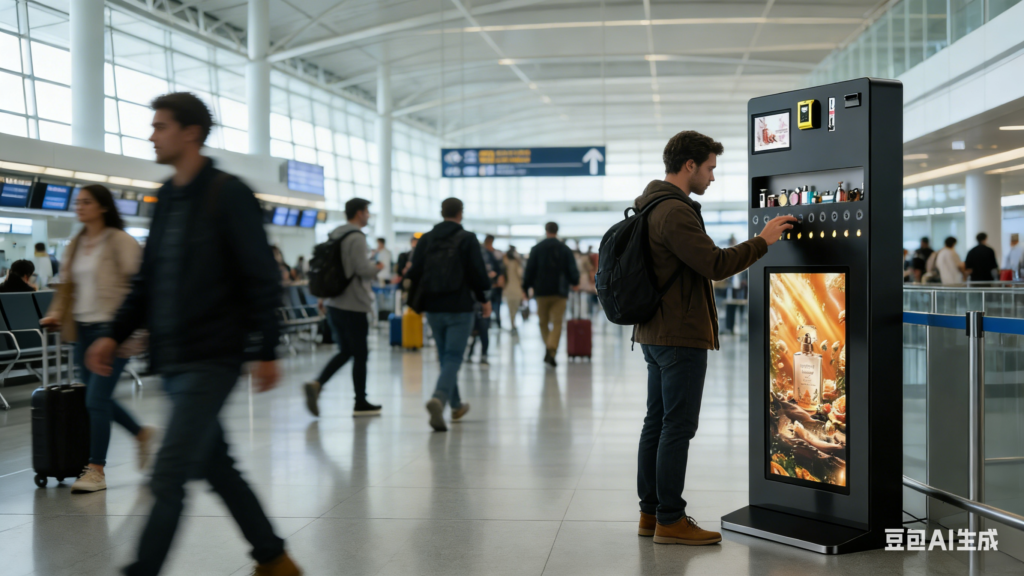
Airports: High Volume with Premium Efficiency
Best-fit model:
High-volume transaction with premium positioning
Airports remain one of the strongest environments.
Travelers are time-sensitive.
They already expect duty-free pricing logic.
Card payment acceptance is high.
The goal is fast conversion with a premium feel.
Operational focus:
Short spray cycle
Clear pricing
Multi-language interface
Avoid long animations or complex menus.
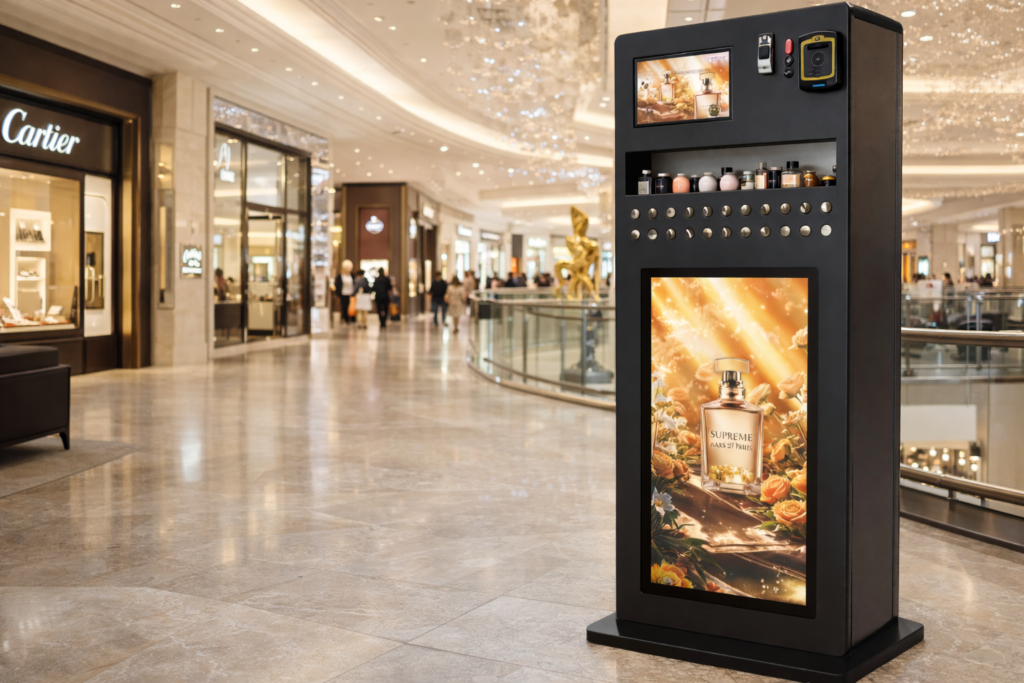
Luxury Malls: Brand Exposure Over Volume
Best-fit model:
Premium brand exposure model
Luxury malls are perception-driven.
Shoppers are prepared to spend.
Visual quality matters.
Cheap presentation does not work.
Operational focus:
Elegant exterior design
Clean screen layout
Fewer but recognizable fragrances
Pricing can be higher.
Volume is lower.
Margins are stronger.
Nightclubs & Bars: Speed and Impulse
Best-fit model:
High-frequency impulse model
Nightlife environments amplify impulse behavior.
Users want a quick refresh.
They do not want instructions.
Speed matters more than storytelling.
Operational focus:
Simple interface
Large buttons
Fast spray response
Restrooms and VIP areas perform best.
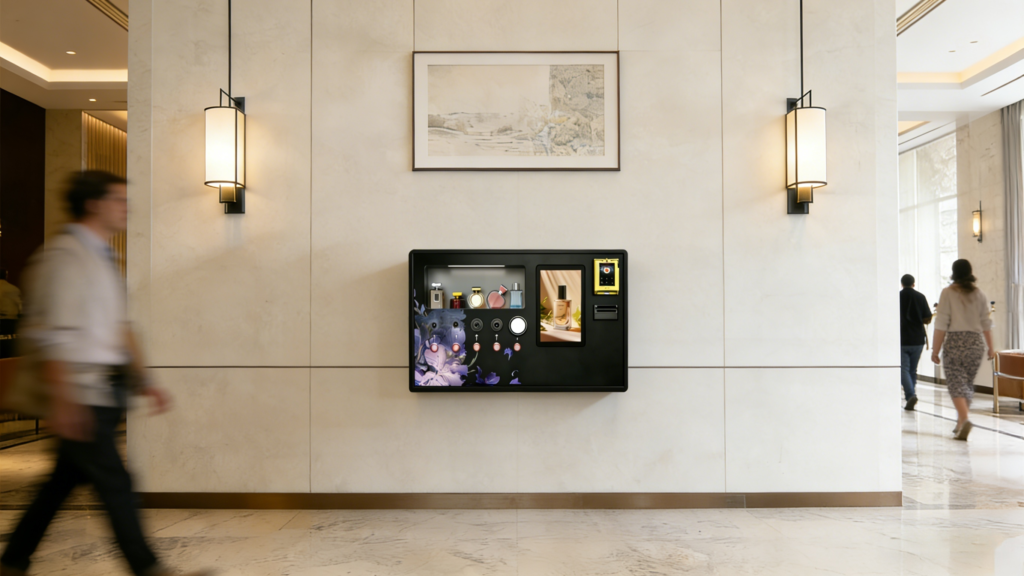
Hotels & Resorts: Experience and Memory
Best-fit model:
Experience-driven with souvenir logic
Hotels are slower environments.
Guests are relaxed.
They are open to emotional purchases.
Perfume works as a memory trigger.
Operational focus:
Placement near lobby or elevators
Seasonal fragrance rotation
Light co-branding
Storytelling matters more than speed.
Emerging Locations in 2026: Model First
New locations continue to appear.
Success depends on choosing the right model.
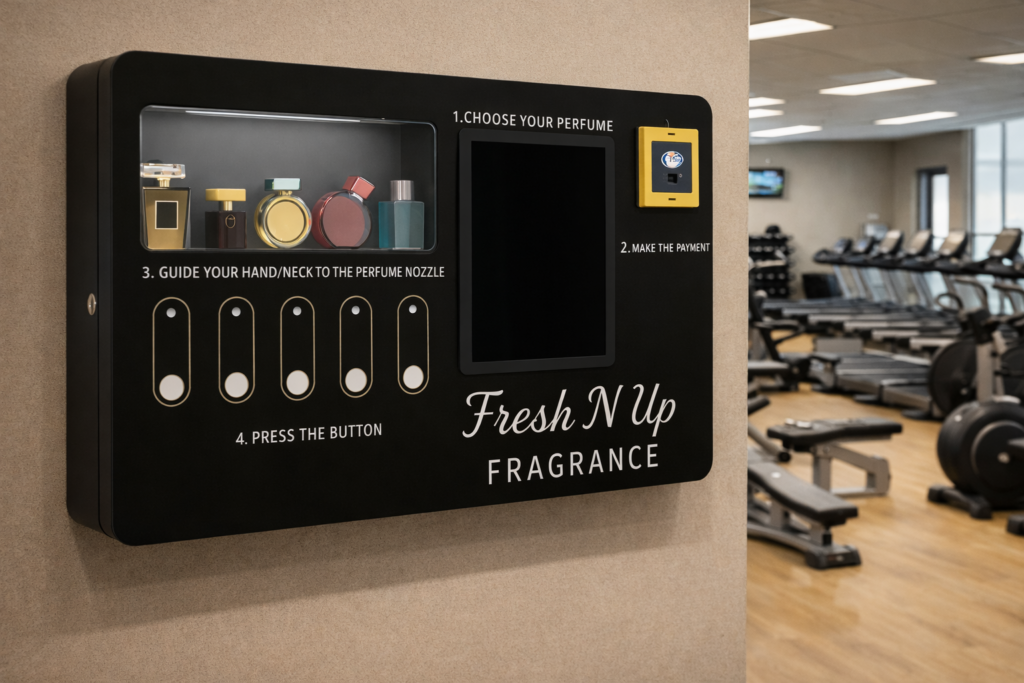
Gyms & Fitness Studios
Post-workout refresh demand is strong.
Price sensitivity is high.
Best-fit model:
Low-price, high-frequency
Theme Parks & Event Venues
Users are playful and curious.
Novelty performs well.
Best-fit model:
Experience-driven
Transport Hubs & Cruise Terminals
Users are in transition mode.
Souvenir logic works well.
Best-fit model:
Hybrid impulse model
Common Mistakes When Model and Location Don’t Match
Many underperforming machines share the same issues.
Common mistakes include:
Premium pricing in fast-paced locations
Overcomplicated interfaces in impulse environments
Ignoring dominant payment habits
A mismatch quickly reduces conversion.
How to Choose the Right Model for Your Location
Before installing a machine, ask:
Who is the user?
How much time do they have?
Are they spending or passing by?
Which payment method do they prefer?
The answers usually reveal the right model.
Final Thoughts
In 2026, perfume vending success is not about chasing the best location.
It is about matching the right business model to the environment.
With a clear strategy, average locations can perform well.
Without it, even premium locations can fail.